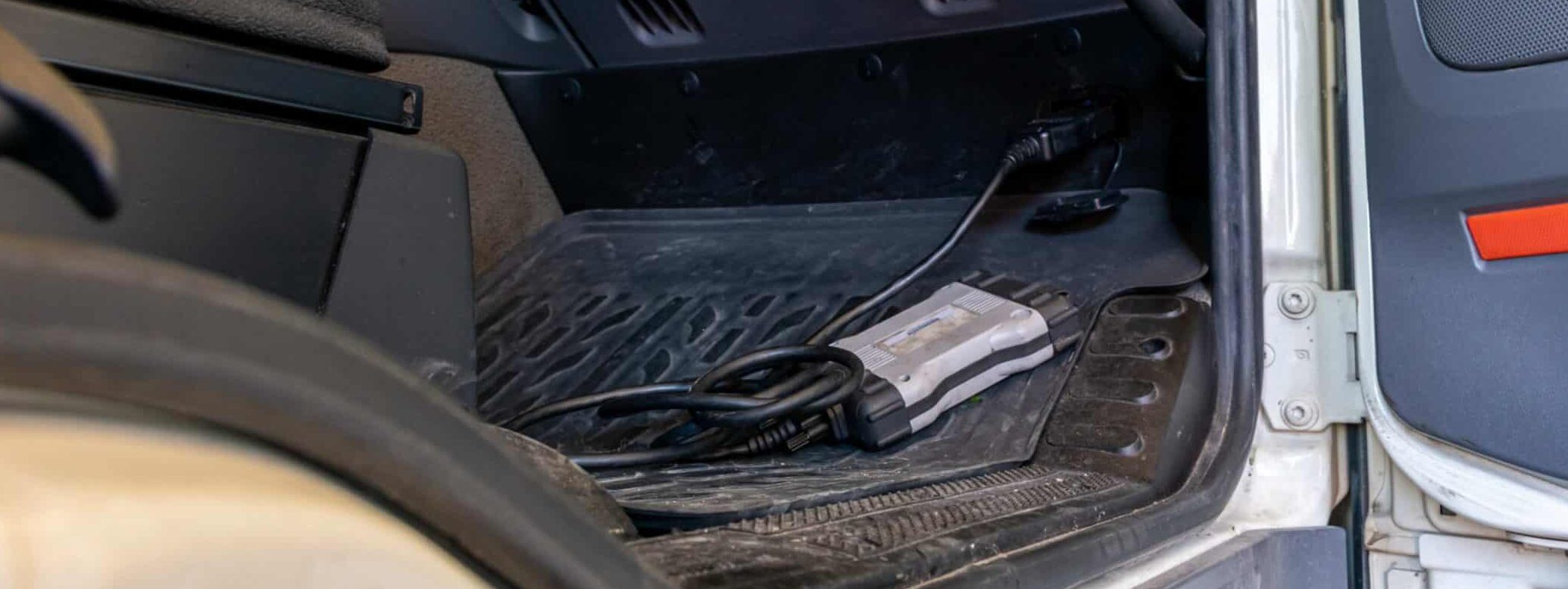
Black Box/ECM Data Preservation After Indiana Truck Accidents
- Digital evidence is becoming increasingly important to Indiana truck accident cases in the modern era, and among the most important is data from a truck’s black box (EDR), ECM, or collision avoidance system that can record critical information in the moments leading up to a crash, like speed, braking, and other activities and operations.
- But far too often this kind of data can be as fragile as it is vital, with a huge risk of getting damaged, altered, or erased either deliberately by unscrupulous defendants or inadvertently by careless handlers, and its validity may also be questioned unless appropriate documentation is produced.
- Fortunately, you can overcome these issues with help from the Indiana truck accident lawyers at Hensley Legal Group, PC, who have extensive experience with black box/ECM data and a proven record of success with large vehicle injury claims, including a $25 million verdict* for a collision with an ambulance.
*SPECIFIC CASE RESULTS. NO TWO CASES ARE COMPLETELY ALIKE.
Trucking is central to life and commerce in Indiana, which has some of the country’s major freight corridors running through it. But with over 417,000 tons of cargo being transported across the state each and every day on heavily trafficked roads like I-65, Indiana truck accidents are probably inevitable and inevitably catastrophic, particularly when smaller vehicles are involved.
With a loaded semi-trailer weighing 20 to 30 times more than a standard car, it may be no surprise that the car’s occupants tend to suffer around 72 percent of the deaths and the lion’s share of the injuries that are inflicted whenever two vehicles like this collide.
And while federal commercial insurance requirements mean that there might be $1 million (or more) in funds available to reimburse you if a reckless trucker is at fault for your crash, that can give the insurance company a greater incentive to oppose your trucking accident claim too. As such, it’s critical to amass the evidence necessary to build a rock-solid case, and among the most critical evidence is the information recorded by a truck’s Event Data Recorder (EDR) (the so-called “black box”), Electronic Control Module (ECM) (sometimes referred to as an “Engine Control Module”), dash cam, or collision avoidance system.
This data can provide irrefutable proof of misconduct by the truck’s driver and other trucking defendants, and you can improve your chances of acquiring and preserving it by partnering with the skilled truck accident lawyers at Hensley Legal Group, PC, a dedicated Indiana personal injury law firm whose experienced attorneys have been fighting on behalf of the wrongfully injured since 1998 and who have obtained such noteworthy results in large vehicle injury cases as:
- A $25 million verdict for a collision with an ambulance.
- An $8.0 million delivery truck accident claim resolution.
- A $5.5 million settlement for a semi truck crash.
In honor of these and other achievements, Hensley has been named one of the Best Law Firms in the United States by Best Lawyers®. Additionally, Hensley truck accident attorney Sarah Graziano has received the Trial Lawyer of the Year Award from the Indiana Trial Lawyers Association, while the firm’s attorneys have been included in the Academy of Truck Accident Attorneys, the Million Dollar Advocates Forum, Super Lawyers, America’s Top 100 Attorneys, the National Trial Lawyers’ lists of the Top 100 Trial Lawyers and the Top 40 Under 40, and the American Association for Justice, Trucking Litigation Group.
To schedule a no-cost consultation with a knowledgeable Indiana truck accident attorney, you can call our office at (317) 472-3333, chat with us online, or fill out our contact form today.
What Are Black Boxes and ECMs?
The data captured by black boxes and ECMs can be indispensable to Indiana truck accident lawsuits, especially when liability is in dispute, but what exactly are they?
Black Boxes/EDRs (Event Data Recorders)
“Black box” is actually the colloquial or slang term for a vehicle’s EDR or Event Data Recorder, an electronic module or circuit board that is contained within the vehicle. If you’ve mostly heard of black boxes in connection with plane crashes, you could be forgiven for thinking that black boxes in trucks do the same thing, i.e. record data and audio for the duration of each trip, but the truth is that their scope is much more limited.
Truck black boxes don’t capture any audio whatsoever, and the data that is captured usually concerns a narrow window of time immediately prior to a collision. In effect, it’s a “snapshot” of a truck accident that can be immensely helpful in figuring out how the accident happened because it commemorates such pertinent details as:
- Engine speed (RPM)
- Velocity before impact
- Status of the accelerator pedal
- Brake pedal on/off status/hard braking
- Steering wheel angle
- Seatbelt usage
- Cruise control engagement
- Deceleration events
- Airbag deployment
The black box records this sort of data over the course of a journey, though it ordinarily gets rewritten unless there’s a crash. At that point, anywhere from five to 60 seconds of data might be saved or “locked in” for later study, depending upon the manufacturer, not that you have an endless amount of time to access it.
Indeed, black box data can be erased accidentally by personnel handling it incorrectly or not so accidentally by defendants who’ll do anything to minimize their legal and financial exposure.
ECMs (Electronic Control Modules)
In a truck or semi-trailer, the black box is generally embedded either within the airbag module or within another source of invaluable truck accident data, the ECM (Electronic Control Module or Engine Control Module).
The ECM is the “brain” of the truck’s engine, monitoring and managing multiple systems to enhance performance, promote fuel efficiency, and reduce emissions. In order to do so, the ECM collects a wide range of data from sensors distributed throughout the engine and uses it to analyze the engine’s operations and make on-the-spot adjustments to ignition timing, gasoline consumption, and other core functions.
Much like with black box data, ECM data can offer important insights into what was going on just before a truck accident, including the precise time of the accident and the engine activity, braking behavior, and other operations at different junctures, such as:
- Rates of motion ahead of or at impact
- Rotations per minute
- Gear or throttle positions
- Accelerator, brake, and clutch application
- Usage of seatbelts
- ABS (Anti-lock Braking System) and stability control activation
- Collision dynamics like speed changes and hard brakes
- Fault codes or DTCs (Diagnostic Trouble Codes) identifying component malfunctions
If the data reveals that the driver was speeding, braking suddenly, or otherwise behaving erratically or that the truck itself was operating in an abnormal fashion, it could supply you with grounds for filing a lawsuit and might even indicate the defendants against whom it should be filed.
Yet also like black box data, the data in the ECM isn’t stored permanently under most circumstances. According to the National Highway Traffic Safety Administration (NHTSA), non-event ECM data is customarily overwritten within 250 ignition cycles (about 60 days on average), but the data could be gone more quickly than that if you neglect to access it promptly, with or without an event.
In the absence of an objective record of the incident, you could be forced to draw upon far less compelling evidence that could negatively impact your level of compensation, the kind of disastrous setback that our laser-focused Indiana truck accident lawyers won’t ever permit.
How Black Box/ECM Data Can Be Lost
Hopefully you now have a better understanding of how much black box/ECM data could matter to your Indiana truck accident case, not to mention how much can be lost if that data is lost, though you might nevertheless be wondering how that could occur.
Some of the problems that could cause black box/ECM data to disappear entirely or become unusable include:
Waiting too long – Since EDR/ECM data is routinely cleared to free up space and can get wiped during power losses, software updates, and system replacements as well, the data you want may vanish if you wait too long to get it. Because although the data associated with a truck accident is supposed to be kept in storage in light of its event status, the reality is that devices like these frequently glitch.
Given that one NHTSA study found that EDRs could miss significant driver actions like braking and steering initiation in rear-end, intersection, and road-departure accidents anywhere from 35 to 88 percent of the time, mistakes obviously aren’t out of the question.
Mistakes during downloads – There are other areas where ruinous mistakes can be made with regard to trucking accident data. As with other electronic devices, the data stored on black box and ECM hard drives must be downloaded, but it’s not as simple as throwing a couple of text files or MP3s onto a flash drive.
Instead, black box/ECM data should only be pulled by certified Crash Data Retrieval (CDR) operators who are using hardware and software that is compatible with the system being accessed. If not, the data might be only partially downloaded, corrupted, or rendered unusable in the process.
Poor chain of custody – Assuming that black box/ECM data gets downloaded in a timely manner, it still might not be useful as evidence without a verifiable record of everyone who gathered, handled, and passed it on from the moment it was generated to the moment it was presented in a legal proceeding.
Without this record, known as the chain of custody, you may be unable to prove that your data has not been altered at any time, giving the defendants’ attorneys an opening to cast doubt on its authenticity or have it declared inadmissible for a jury’s consideration.
Deliberate erasure – We have primarily looked at how you could be unintentionally blocked from getting or capitalizing on black box/ECM data, but one of the main reasons that you have to act fast to secure this material is that it can be deliberately erased before you can view it.
Although this is dishonest and almost certainly illegal, that doesn’t stop unscrupulous defendants from blurring ethical lines and insisting it was done either in error or out of ignorance, and it can be very tough to hold them to account, much less get your hands on the data you need.
How Hensley Legal Group, PC Can Preserve Black Box/ECM Data
As you can see, black box/ECM data is often as fragile as it is vital, and it can easily end up damaged, altered, obliterated, or merely inaccessible if bad decisions are made in the aftermath of an Indiana truck accident. Fortunately, there are a number of steps that you can take to keep this data intact until you can view it, and the number one step is hiring the seasoned Indiana truck accident lawyers at Hensley Legal Group, PC.
What can Hensley do to preserve your black box/ECM data? Once you retain our firm, our attorneys will launch a comprehensive investigation to unearth the root causes of your accident and each of the defendants who contributed to it, a list that might include the truck’s driver and the trucking company, among others. We will then establish valid claims against them as soon as possible by sending them formal notification in writing and alerting their insurers, although a lawsuit will more than likely be filed on top of that.
In our initial correspondence with the trucking company and any other defendants believed to have possession of or access to the truck, we will demand that all relevant evidence be preserved, including the black box/ECM data. Specifically, the letter will warn the defendants not to download, alter, or erase any of that data until it can be jointly inspected at a later date.
Furthermore, the defendants will be told that we will respond to any failure to preserve this data by taking action against them in a court with the authority to issue a binding judgment for spoliation of evidence, recognized by the Supreme Court of Indiana in Cahoon v. Cummings as:
“The intentional destruction, mutilation, alteration, or concealment of evidence.”
This is no idle threat: our tenacious Indiana truck accident lawyers are more than willing to intervene legally if there is any hint that the data or any other evidence has been or is danger of being compromised, and the consequences of not heeding them can be incredibly dire.
If defendants are found guilty of either failing to preserve electronic data or destroying it altogether, Indiana courts could impose punishing sanctions like:
- Instructing the jury to infer that the missing evidence would have been favorable to the plaintiff and unfavorable to the defendants; or
- Ordering the defendants to pay legal fees or fines in accordance with Indiana Trial Rule 37.
When it comes to preserving key evidence like black box/ECM data, our firm definitely means business, and you can rest assured that any defendants who doubt us are doing so at their own peril.
Making the Most of the Data Once We Get It
After the black box/ECM data has been preserved along with any other digital or physical evidence, we will take pains to get it downloaded in a way that leaves it undamaged and legally admissible.
Typically, this will take place with authorized experts from both sides present to observe the extraction. During this session, a certified technician of our choosing will conduct a forensic download utilizing manufacturer-specified hardware.
Next, the data will be thoroughly examined by our meticulous Indiana truck accident attorneys in conjunction with any experts whose services may be warranted, with the proper chain-of-custody documentation produced at every juncture. By dotting every “i” and crossing every “t,” we’ll ensure that any proof of wrongdoing we find will withstand every objection that the defense attempts to raise, thereby allowing us to admit it during negotiations or at trial.
Ultimately, an Indiana truck accident case is only as strong as the evidence that goes into it, and you can always rely on Hensley to preserve that evidence from destruction and utilize it to your maximum advantage so that you can be compensated for the totality of your losses.
Get in Touch with Our Indiana Truck Accident Lawyers
Hensley Legal Group has been fiercely advocating for the innocent victims of negligence for more than a quarter century. If your world has been turned upside down by a devastating truck accident in the Hoosier State, get in touch with our Indiana truck accident lawyers to learn how they can set things right again.
Please call our office at (317) 472-3333, chat with us online, or fill out our contact form at your earliest convenience for a complimentary case review with an accomplished Indiana truck accident attorney at our firm.
Frequently Asked Questions
What is the difference between a truck’s “black box” and its ECM?
“Black box” is a term for a truck’s Event Data Recorder or EDR, an electronic module or circuit board that is designed to capture critical information in the moments leading up to a collision.
The black box is often embedded within a truck’s ECM, an abbreviation for the Electronic Control Module (or sometimes Engine Control Module), which acts as the truck’s “brain,” continuously recording and making use of operational data like engine speed and braking activity.
How long is black box/ECM data stored after a crash?
The length that a truck’s black box/ECM data is stored can vary based upon the manufacturer., although the EDR may capture anywhere from five to 60 seconds of data immediately prior to a crash, and it is supposed to be preserved until it can be downloaded.
However, other kinds of data may be overwritten automatically at certain times, and waiting too long to access it can increase the risk of damage or deletion.
What sort of information does black box/ECM data contain?
Black box/ECM data may contain a wide range of information about driver and vehicle operations right before a truck accident that could potentially allow you to reconstruct how it occurred, including, among other details:
- Engine rotations per minute (RPM)
- Vehicle speed before or upon impact
- Steering wheel positioning
- Clutch, brake, and accelerator activity
- Cruise control engagement
- Seatbelt usage
- Deployment of airbags
- Hard braking events
- Fault or Diagnostic Trouble Codes (DTCs)
How can black box/ECM data be downloaded?
In order to avoid corruption or erasure, a truck’s black box or ECM data should only be downloaded by certified Crash Data Retrieval (CDR) operators who are using manufacturer-approved hardware and software that is compatible with the system being accessed.
If this data is pertinent to a truck accident claim or lawsuit, any retrieval should take place in the presence of authorized representatives from every party involved or else its validity may be disputed later on.
What is a spoliation of evidence letter?
Spoliation of evidence is the destruction, alteration, or concealment of evidence.
Because of how important black box/ECM data can be to a truck accident case, a plaintiff’s attorney will typically send a spoliation of evidence letter to the trucking company or any other defendants in possession of or with access to the truck demanding that this data be kept intact. This letter may also warn the defendants of the consequences of ignoring this demand, including sanctions in a court of law.
Available 24/7
Free Case Review
You won’t pay any fees until we win your case.
It’s easy - you can: