Car Accidents on the Indiana-Illinois Border Near Hammond: Which State’s Laws Apply to Your Claim?
The Illinois-Indiana border near Hammond is a dangerous area to drive. Thousands of trucks, confusing exchanges, and heavily trafficked intersections could make accidents inevitable. If an accident happens in Indiana, Indiana law governs your claim. But insurance companies may try to confuse you in order to get you to accept less or run the clock […]
October 10, 2026
- The Illinois-Indiana border near Hammond is a dangerous area to drive. Thousands of trucks, confusing exchanges, and heavily trafficked intersections could make accidents inevitable.
- If an accident happens in Indiana, Indiana law governs your claim. But insurance companies may try to confuse you in order to get you to accept less or run the clock out on the Statute of Limitations.
- Working with a skilled Hammond car accident lawyer may be your best way to stand up to the insurance companies and get the financial recovery you need and deserve.
Driving in Hammond near the Indiana-Illinois border is pretty much never fun. The Borman Expressway is filled with trucks and cars coming to and from Illinois. There are confusing exits that drivers are trying to navigate at high speed. Even off the many highways, traffic around the Horseshoe Casino or near Purdue University Northwest can be a nightmare.
Accidents are common here, and many of them happen just over the line. These accidents frequently involve out-of-state cars, most often from Illinois, but they could be from anywhere, given the nature of interstate commerce that flows through the region. So the question is: Which state’s laws apply to your claim?
That all depends on where your accident took place. It doesn’t matter where the other vehicle is registered or where the other driver lives. If you are in Indiana, it is an Indiana claim. But these claims can be tricky. Insurance companies may try to turn you around and delay you, which is why working with a skilled Hammond car accident lawyer may be the best way to get the financial recovery you need and deserve.
The Danger of Accidents on the Indiana-Illinois Border Near Hammond
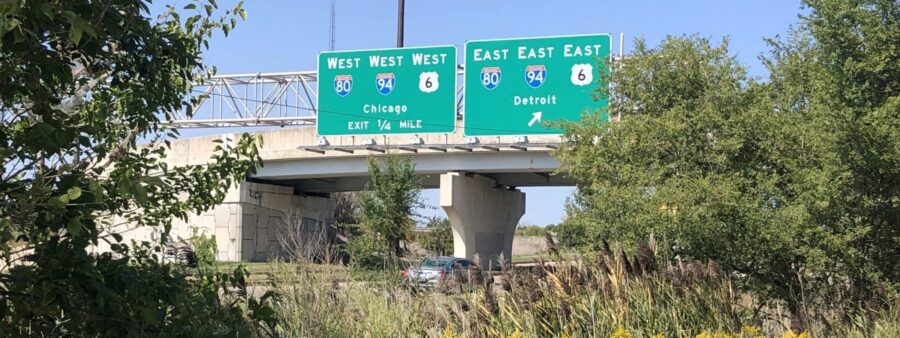
Think about driving on or near the Borman Expressway, especially the extremely confusing interchange at 80/94 and Indianapolis. There are trucks everywhere and drivers trying to figure out where to go. If you are off the highway, you are still at risk from velocitized drivers and a series of controlled intersections.
Even directly on the border, the area just past the Skyway is filled with drivers entering and exiting who might be a little dizzy coming down the elevation or staring at the incline while deciding on a lane. The sheer number of cars and trucks makes accidents extremely frequent. (And if the Bears move to the area, the amount of traffic will make a normal rush hour look pleasant).
Accidents near the border can be catastrophic. You could be in a truck accident on the Borman, colliding with a vehicle many times heavier than your car. You could be hit by a delivery truck driver changing lanes and turning around in an effort to hit deadlines. You could be in a multi-car pileup caused by a driver jumping over to get to an exit.
All of these can lead to high costs from many different directions, including:
- Medical bills
- Surgery expenses
- Lost wages
- Therapy
- Pain and suffering
The moment of the accident is just the beginning of your journey, which could take years, and potentially impact the rest of your life. You deserve financial compensation in order to recover. The question is, under which state’s laws?
Which State’s Laws Apply to Your Claim?
The law here is simple: If the accident happened on the Indiana side of the border, then Indiana laws dictate the case. It doesn’t matter if it is on the interstate or on the streets of Hammond. It doesn’t matter if you both just crossed the border heading east. It’s all the same.
That means cases are determined by Indiana’s comparative fault laws. If you are less than 51% responsible for the accident, you should be entitled to compensation from the other party or parties. If there are multiple parties, like if a car driver swerves causing a truck to sideswipe you, then they can all be potentially liable for your recovery.
(There are interstate trucking laws too, but the laws of Indiana, like in many other states, essentially mirror the federal ones.)
That seems straightforward. But insurance companies may try to make it less so.
How Insurance Companies Can Complicate Your Claim
Insurance companies know they are bound by Indiana law when an accident occurs on that side of the Illinois-Indiana border. But they may hope you don’t know that. So during negotiations, they might introduce Illinois law to confuse you. They could drag their heels. They may try to make you take a lower settlement. In their ideal world, they’ll stretch things out for two years so you’ll miss the window for filing a claim.
This is especially prevalent when there is a trucking company involved. These accidents tend to cost insurance companies more, given the extent of potential injury, and so they may fight them even harder.
That’s why you’ll want a Hammond attorney who is practiced in both car and truck accidents. You might have a complex case with multiple claims running. You don’t want to miss any deadlines or make a wrong move. Doing so could make it harder for you to get what you need to get your life back together.
Reach Out to Our Experienced Hammond Car and Truck Accident Attorneys
The Illinois-Indiana border is chaotic. Your case doesn’t have to be. The Hammond car accident lawyers who can make sense of the complications of an Illinois-Indian border accident and fight for you until the end are at Hensley Legal Group, PC, a dedicated Indiana personal injury law firm whose experienced attorneys have been fighting on behalf of the wrongfully injured since 1998.
Simply call us at (317) 472-3333, chat with us online, or fill out our contact form now for a free consultation with a knowledgeable Hammond car accident attorney.
Available 24/7
Free Case Review
You won’t pay any fees until we win your case.
It’s easy - you can: